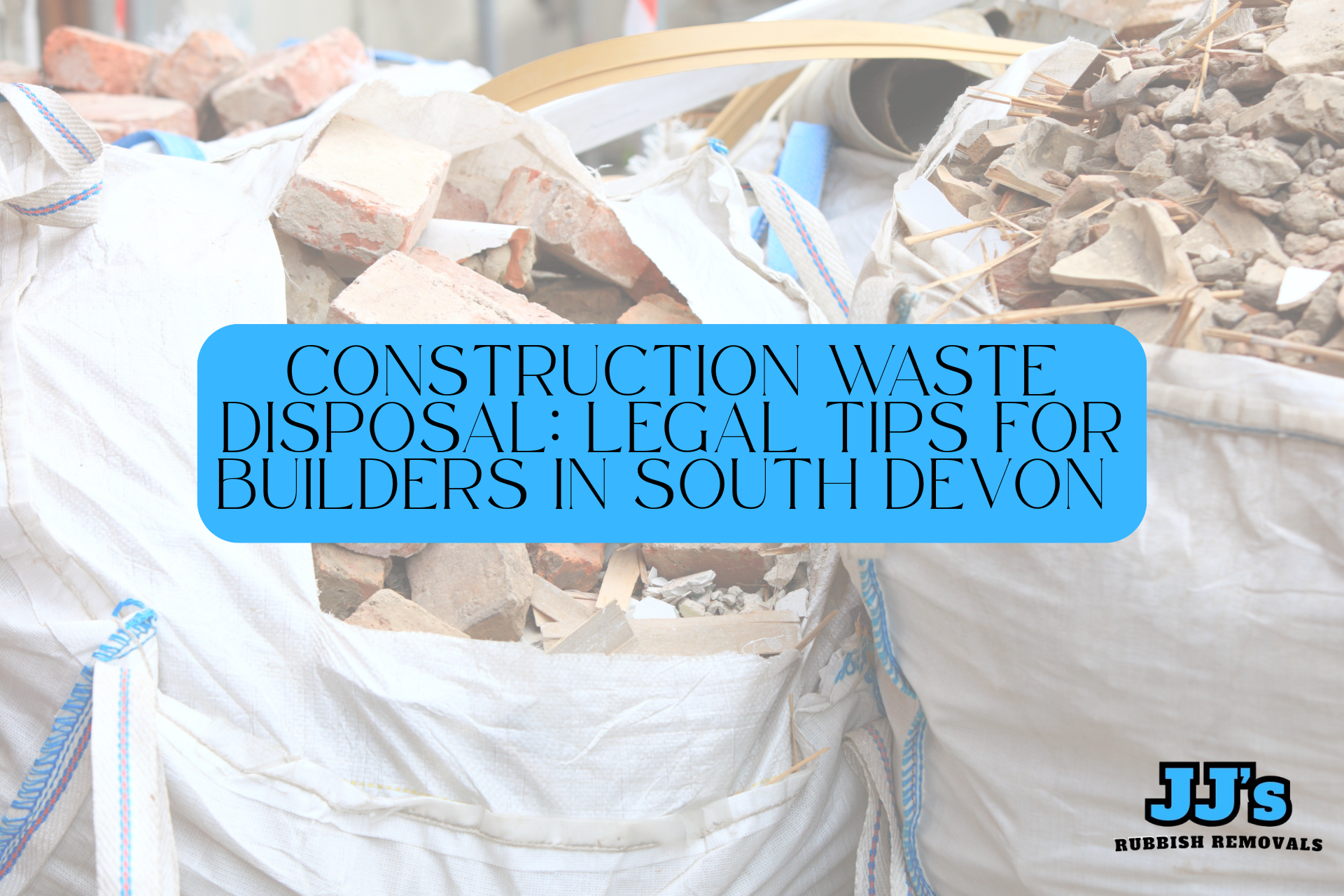
Builders and tradespeople generate a copious amount of waste per year to include materials such as bricks and plasterboard, but how do they get rid of it all?
Well, proper disposal of building materials isn’t just about clearing a work site after you’ve finished – it’s actually a legal requirement to dispose of your waste responsibly. Failing to follow local regulations can result in hefty fines or legal action – which is best to avoid!
There may be many materials that need to be removed safely following a job, such as rubble, timber, metal piping and fittings, plasterboard and insulation, packaging (cardboard/plastic) or paint and adhesives (which constitute hazardous waste.)
The most important tip to any tradesperson, is that you MUST only hand your waste to a licensed waste carrier. If you chose to use an unlicensed waste carrier and they fly-tip your waste, you are still liable. You can be prosecuted for this! Always ask for a Waste Transfer Note from the licensed company you use as it is your proof that you have paid for legal disposal of your waste. A Waste Transfer Note is a legal document detailing who generated the waste, who collected it, what type of waste it was and how it was disposed of. It is advised that you keep this document for at least 2 years as you may need to show it to the local council or Environment Agency if audited. It is always best to be prepared and better safe than sorry!
Alongside the general builders rubbish mentioned above, there can also be hazardous waste to remove. This may include asbestos, paints, varnish and glues or treated timber and solvents. This requires special handling and disposal. It is extremely important that you use a licensed hazardous waste carrier and label waste correctly for safety purposes. You must keep these separate from general construction waste.
It is good practice to segregate waste on-site as you go along as not only is it more efficient and cheaper to recycle when waste is organised into groups (I.e. timber or metals) it also reduces your environmental impact. Some disposal sites may charge extra for mixed waste, meaning your waste collector will also charge you extra! If you are struggling to stay organised, you could use skips or separate piles for each type of waste. You could also use colour-coded buckets for sub-contractors so everyone can follow the same rules and keep everything simple.
With a lot of waste, it could be tempting to burn your waste to save costs. Do not do this. Burning waste on-site is not allowed under most circumstances and breaches envrionmental regulations. You think you are saving money on a waste disposal company, but you may find yourself with hefty fines and complaints from locals for causing air pollution. Always factor in removal costs for your job.
Another way to reduce costs with tradeperson waste is to reuse or donate where possible. Materials such as pallets, bricks or timber are often sought after and people are generally happy to take these off your hands. It is easy to advertise locally by a sign outside the site with wording such as ‘free pallets here’ or posting on a local Facebook group and marketplace – these options also help to reduce landfill as well as save you costs, so it’s a win win!
How JJ’s Rubbish Removals can help builders in Torbay, Dawlish and surrounding areas:
– Fully licensed waste carrier
– We provide all relevant paperwork needed for a legal removal
– We are flexible and reliable
– We have very competitive pricing for regular trade clients
– Services cover a wide area such as Torbay, Teignmouth, Dawlish, Chudleigh, Bishopsteignton, Exeter, Newton Abbot
Need a construction waste removal quote? Give us a call now on 07984921138 for a free quote.